Thursday, February 4, 2016

Haiti Reflections

I’ll admit that I was surprised when National Geographic asked me to go to Haiti. I quickly realized, however, that the country is so much more than CNN portrays it to be. There is a strong culture and a strong sense of pride in Haiti that, in my opinion, is awfully impressive. The country still deals with corruption, disease, and poverty. However, this nation is not one to lie around and feel sorry for themselves. They move on with their lives and the people I met were as hospitable as could be.

Haiti is a country with a fair amount of unused land near the coast. Like Nicaragua, the natural beauty of it is amazing. The food I ate was delicious, and the combination of rural and urban lifestyles was exhilarating. I would tell anyone to go to Haiti because it is an experience no one will forget. I know I won’t. To see a country so poor yet so proud of who they are is incredible. I saw this through the Mardi Gras festival. It was an amazing two days meeting the mild climate, rich culture, and proud people of Haiti.

Second Day in Haiti

My second day in Haiti started with a coffee and bread breakfast in my hotel. From there, I left the city. The first half of my day was spent in the northern peninsula of Haiti. I drove there from Port-au-Prince. I found a rural village of very poor living conditions. When I arrived at the farm like area, which is similar landscape to much of the region, I got out of my car. There were probably 100 people in the small town center and every single one was silent and looked at me. They were shocked that an American had come out here. I waved as a signal of peace and said hello, and they all seemed to spread apart for one person. This person was a woman who could speak English. She approached me as she told everyone to go back to what they were doing. I asked her if they could show me their home and the very small village. She was delightedly shocked. She took me around the village, which was a very poor place. The people all looked at me when I walked by. After a morning of touring some destroyed houses and some newer ones, she asked if her family could provide me with lunch. I didn’t want to cost anything to the citizens, but I knew that in Haiti it was rude to decline. I ate lunch with the woman and her family in their humble home. During the meal, I asked if the earthquake in 2010 was the reason why everyone’s houses were destroyed. She responded with a yes, followed by a description of the event. She said that the earthquake killed 300,000 people in Haiti. Hundreds of thousands more had no homes because they were destroyed. She said that the construction of the homes had been so shoddy that they easily broke when the earthquake hit. I asked her what her initial reaction was. She said that she was just scared. When the two aftershock earthquakes hit she was surprised and worried they were going to be even worse. They weren’t worse, but they were almost as bad. The electoral office, the office of the 4th branch of government, was destroyed. She said she felt like the world was ending, and her kids, who were toddlers, barely survived. She said that the entire community had grown used to Americans and the Red Cross, because so many of them were deployed all around the country. I asked why the people in her village acted surprised to see me and she replied that physical aid eventually ceased and Americans scarcely ever come to the country much less her small village. After lunch of beans, I was given a special dessert that the woman had made. It was a pumpkin soup. She told me that it is most commonly consumed on New Years. I ate every last drop of it. It was the best dessert I had on my entire trip and it was one of the best desserts I’ve ever had. After lunch, I realized that I had gotten behind schedule and was almost out of daylight. I said thank you to the woman, whose name I found out was Beatrice,  and her family and left the village. I obtained the address of the village so I could write them a letter. My next stop was a drive away in the south part of Haiti. I went on another hike up a mountain. I could see the Caribbean Sea in the distance and all of the land leading up to it was natural and beautiful. I stayed up to watch the sunset and had to use a flashlight to get down the mountain. When I got down, I went to my car so I could head back to my hotel in Port-au-Prince. Once I arrived, I went out to eat. I ate chicken and rice with a sweet potato and beans. It was the biggest meal I’d had the whole trip. My day came to an end when I went home after walking through the city one more time. It was the first day of lent and everyone was in their homes, contrary to the whole city on the streets during the festival of Mardi Gras. After I walked around, I went back to my hotel for my last night before returning to the U.S.

First Day in Haiti

I woke up my first morning in Haiti to the smell of a scrambled egg. I was delighted to find it with a cup of coffee waiting for me in the kitchen of the family which I was staying with. I stayed with a wealthier family on this trip because most Haitians live in poverty, and I wouldn’t want to ask them to host and feed another person. After my cup of still delicious coffee and scrambled egg, I headed out.
I had known that today was a holiday in Haiti. Of course, it was Mardi Gras. After a long festival of parades and big food parties, Haitians end the celebration on this day. In Haiti, Mardi Gras consists of different fats being consumed. I was grossed out at first but found the food was delicious. Additionally, I had Haitian cake and cola. Both were very unique and incredibly good. It was a very fun festival. I wish I knew people here to enjoy it with.
I spent the entire day in the capital Port-au-Prince. I walked around the streets for a large portion of the day to enjoy the happy atmosphere. From the center of the city, near the beautiful capitol building, I noticed that the poor people lived in the outskirts of the city, on hills. I was out all the way until nighttime, when I went to dinner at a nearby restaurant. I ordered a loaded sweet potato, and it was very good. Sweet potatoes are very common in Haiti. While at dinner, I overheard people at the table next to me having a political discussion in English. I was most surprised by the fact that they were talking in English. I heard them talk about how the government doesn’t care about the people, and that it why everyone is in poverty. It was a nice restaurant, so I assumed the friends were an upper class group. I found it interesting that these people thought about their government this way. For my second night in Haiti, I stayed at a nice hotel. I stayed in the El Rancho hotel. It was very nice. Although my day was all taken up by the festival and Port-au-Prince, it was a fantastic, fun, and meaningful day.

Thoughts Before Haiti

When most Americans hear the country “Haiti” they think of a poor, depressing country. Haiti is very poor, as it is the most impoverished country in the western hemisphere. However, that does not mean that the nation is in any way not a great place to visit.
Haiti was the first country in the Caribbean to gain independence. Having been colonized by France, one of the official languages of the country is French. The other, more spoken one, is Creole. Most Haitians are of the African decent. 95% of citizens fall under this category.
The climate in Haiti is quite nice. With warm temperatures in a generally mild climate, Haiti receives a lot of rain from the month April-June and October-November.
Haiti has an impressive population of over 10 million people. Most of these people live in urban areas. I can’t wait to get a chance to meet some of these people.
I’m most excited to see a country for myself that has not been known for its culture.
Here’s to a great few days of meeting the climate, culture, and people of Haiti.

Nicaragua Reflections


Nicaragua is not a country with many tourist attractions. In fact, Nicaragua has high poverty rate and low per capita GDP. However, the lack of fancy tourist attractions and restaurants allows for an untouched landscape to be displayed. Much of the country is wilderness with very little effect imposed by humans. It’s quite fascinating. I loved Nicaragua because of its natural beauty. Like Bolivia, the people of the country are proud of their culture and celebrate it. I wish I had more time to explore other sporting events or restaurants in the Managua area. I think that Nicaragua is a great place to visit not because of the fancy resorts on the beautiful beaches, but because of the natural beauty that the small, Central American nations presents.

Second Day in Nicaragua

I woke up in the capital of Nicaragua, Managua. I was in a clean hotel with nice service. In the lobby, I had coffee and some bread and I was on my way. I went to a saltwater lake, the biggest in the country, which was right near the capital. There, I got a great look of distant volcanoes and even swam a bit. Unlike the other coast, there were many people, mostly natives, there as well. After several hours there, I drove to one of the volcanoes across the lake. The drive was very long and I was surprised at the size of the lake. I arrived at the base of the volcano and began a hike up. Of course, the volcano was not active so I was not burned to death. It was really neat to be able to climb up there. The view was incredible. I could see both the capital of Nicaragua and the Pacific Ocean in one view. The hike was several hours and I stay up there for a while too. By the time I got down, I was quite hungry. I went for lunch in Managua and went to a popular restaurant, to see what the service industry was like. I got a steak and it was one of the best that I’ve ever had. I was quite satisfied afterwards. I was running out of daylight, so I went to the Pacific coast, the more popular one in Nicaragua, and spent about an hour to check out the view there. I looked back to try and see the volcano I hiked, but there are so many volcanoes in the area I couldn’t tell which was the right one. After it got dark, I went to a, LNBP baseball game. This league is the professional baseball league in Nicaragua. Baseball is the most popular sport there, and many MLB players come from Nicaragua. After the game, I went back to the same hotel I stayed in the night before, and went to sleep on my final night in Nicaragua.

First Day in Nicaragua

It wasn’t to my surprise that I had an excellent day in Nicaragua. Today, I was on the eastern side of the country. I woke up in the house of the natives who were hosting me. They, like the Bolivians, were extremely welcoming and kind. I had breakfast with them. It was early in the morning and all the family had was coffee, so I drank it. The coffee was still great.
The husband’s daughter’s wedding was later on in the day, and he graciously offered for me to attend, saying he would be “blessed if I did”. I told him that my day was packed and I wouldn’t be able to go. He wrote down the address and time just in case and I took it with me. After saying thank you to the family, I was on my way. My first day was to be spent in the eastern portion of the country, where there are flat plains and less people, as the capital resides on the other side.
I began by driving my rental car out to the coast, to see my first ever view of the caribbean sea. When I arrived, there were very few people if any near me. I sat down and enjoyed the nice view. After several hours watching the sun go by and exploring the local town of Puerto Cabezas, I had to leave to attend a church nearby. I had already gone to one in Bolivia, but I wanted to go to one in Nicaragua, and not assume that they would be similar. The churches were somewhat similar, in that festivities afterwards combined Spanish and Native cultures, and the church was a Roman Catholic one.
The food they served afterwards was a tortilla with rice and beef on the inside. It was quite tasty. While sitting at a table with some of the members of the church, I asked if any of them spoke English. Out of 7 or 8, only one did. I began to try to make conversation. It was mostly small talk: asking about the food, the church or his family. However, at the end, I asked what he thought about their President Ortega. He responded telling me that he didn’t like him, but some people do. He said that their democracy is threatened because he was able to run for a third term and again for a fourth in 2016. He did mention that he was happy the Ortega supports a canal project in Nicaragua. He explained that a canal would bring many jobs and boost the troubled economy in the nation. The man, whose name I learned was Marcus, then asked me what I thought about President Obama. I was taken aback. It never occurred to me that people in the small nation were up to date with American politics. I thought it was quite interesting. I left a little while later to see a national reserve in the south.
In my car, I thought about the man’s knowledge of our country. I realized that I owed it to the Nicaraguan people to attend the woman’s wedding who had hosted me. I needed to show support for the culture and learn more about it. I pulled the piece of parchment out of my pocket and read the address. I entered it into Google Maps and was on my way. I found myself lost in my efforts to get there. I pulled up to a small coffee shop and asked the waitress how to get to the area I was going to. I realized that she didn’t speak English, but only Spanish, the main language in the country. In the moment, I regretted my decision to take Chinese in high school. After somehow communicating, I was back on my way. The wedding was very nice. It was a small crowd, and the church was old. However, the people in attendance were quite happy. I left the church after having coffee for dinner and headed to a small hotel near the west coast, in Managua, the capital of Nicaragua. After a long day in the west. I ended it at my hotel, hoping National Geographic wouldn’t be mad for going to the wedding, changing my itinerary.
Thoughts Before Nicaragua

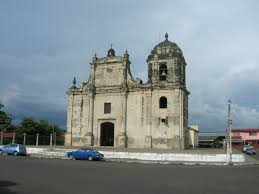
I now fly to Nicaragua, in Central America. I am excited to see what the small country has to offer, including its beautiful scenery that attract tourists around the world. Nicaragua is still the biggest country in Central America. The current government in Nicaragua is actually a government the U.S. opposed and they funded groups that opposed the current government. The regime is called the Sandinista. Similar to Bolivia, Nicaragua has two very different climates. The east receives roughly double the rainfall of the west, and the temperatures are slightly cooler. The east also has level plains throughout. The west has warm temperatures, averaging 80 degrees F. The west has a combination of low valleys and high volcanoes. Once again, I intend on seeing both sides of Nicaragua. Nicaragua is a very popular vacation spot, and I will not be going to vacation hotels. Being in Central America, Nicaragua is bordered by oceans on both the east and west. I’m glad I’m getting a chance to go to Nicaragua, as it was a dictatorship until 1979, and had seen instability since.

Here’s to a great few days of meeting the climate, culture, and people of Nicaragua.

Bolivia Reflections


Often times, choosing a place to go is based on security. Most people, including myself, mostly take trips to first world, developed countries. However, to see the culture of a place that isn’t given much attention is a life changing, exotic, and thrilling experience. I wish I could stay in Bolivia for much longer. The people of Bolivia don’t seem to resent other, more popular cultures. Rather, they are invested in their own culture. The Bolivian culture has evolved into a rich blend of both Spanish traditions and Native American traditions. The citizens don’t see either as bad, and they rejoice in their history. I watched kids play soccer, the most popular sport, as I was driving. The kids were of several different races. Bolivia officially recognizes 37 different languages as their own. Although poverty is very strong in Bolivia, the government and the people recognize everyone, and everyone has the rights needed to work hard and become successful. The ideals are similar to that of the original America. I think that anyone would find a trip to Bolivia a life changing experience.

Second Day in Bolivia

This morning I woke up late. After a start with fresh bread and coffee from the hotel I got my car and began to take off. I went east to the rural, low elevation part of Bolivia. First, I went to a coffee farm in the north, where I got to explore the making of coffee and got to see coffee beans grow. Additionally, I had the best coffee of my life. I had never had so much coffee in two days, but the drink was flavorful and I was delighted to get a chance to have it. The farmers who National Geographic had contacted to host me on this tour were quite welcoming, and flattered at my interest in their work. After several hours at the farm, I left to drive to the west again, where I visited Lake TIticaca. I didn’t stay for long, but I was thrilled that I got to see the largest freshwater lake in all of South America. Actually, part of the lake is in Peru. I didn’t go into the country though. Large portions of it are in Bolivia. The view was quite amazing. From the shores of the lake I could see the Andes Mountains to the east. The view of the two in one image is something that can’t be explained through Google Images. After I was at the lake, I drove all the way southeast to near the border of Bolivia and Paraguay. I visited a beautiful national park called Kaa-Iya of the Gran Chaco National Park and Integrated Management Area. I got to see neat tropical areas that you can’t view nearly anywhere else. After being given a helpful tour, I headed back to Santa Cruz for my last night. This time, I stayed in a hotel. The hotel had a view of some of the higher lands in Bolivia, and I think I could see the Andes Mountains. It was the perfect last view of Bolivia and all of South America. It was another sight I will never forget.

First Day in Bolivia

Today, I woke up in the home of a native family in Santa Cruz, Bolivia. The family looked quite happy when I enjoyed their ceremonious dish, which could most be compared to a cheese omelet. The family had many friends and other family over just for breakfast. I asked the father, who seemed to be the most English-oriented person there, why all of his friends and family are coming over only for breakfast. He told me that many of the people at the breakfast had never seen an American. Tourism had not quite hit the nation. After breakfast, I knew I had to get on my way. I said goodbye and thanked the family that hosted me.

My morning was delightful in the city. I got a chance to walk around the metropolitan area and I was quite amazed at the culture in the city. I went into a coffee shop, one of many, and tried to get the most basic black coffee. They seated me at a table facing the wall. I thought maybe I had done something disrespectful to their way of life, but when I looked around, I noticed that everyone was facing the wall. No one bothered to look at anyone else. I can’t say that it looked as though people were being rude, but rather respectful, as they found it disrespectful to watch other people eat. Soon after, I left the city of Santa Cruz and, using a car I bought, drove west into the highlands of Sucre, the judicial capital of Bolivia. I got a chance to look out at the vast lands below me, as Sucre is in the Andes highlands. It was a wonderful view. I could see a vast range of mountains. Before I left the judicial capital, I went to a church to observe a service. I found the closest one on Google Maps and headed in that direction. Nearly every church I found on the map was Catholic. This finding made sense because 95% of the country identifies to Roman Catholicism. The church was packed with citizens of the middle class. I wanted to make sure I attended a church with middle class members, because upper class members tend to follow more western culture. Many people offered me seats and Bibles. I noticed that the women in the service had very set clothing attire, while there was much more variation among the men. Additionally, all of the prayers were lead by men. Other than this cultural aspect, the service seemed similar to a service in the U.S. After the service, I stuck around for a fun ceremony of dance and food. It was around lunch time, which was when the biggest meal of the day was had. The members of the church generously offered me from their large amounts of food. Multiple servings and courses of meat and beans and coffee were offered to me. I accepted all of the food that was given to me because I thought it might be rude to do otherwise. The celebration combined the religion that the Spanish had brought over from Spain with traditional Native American dances. The way everyone came together in pride of their culture was something I’ll never forget. Unfortunately, I couldn’t stay until the end of the ceremony, as I had to cap my day off elsewhere. It was late afternoon, and I began to drive to La Paz, the legislative and executive capital of Bolivia. When I arrived, I headed to a crowded restaurant to get a sense of the night life in Bolivia. Everyone eating and drinking seemed to be enjoying themselves. The scene wasn’t too different from that of an American bar or restaurant. I didn’t have the stomach capacity to eat dinner, so I sipped on some decaffeinated coffee. I knew that Bolivia took great pride in their coffee beans, but I didn’t expect such tasty a drink. The restaurants all closed at 8, as most things do in the higher elevations of Bolivia, due to the Arctic temperatures that come in. I arrived at my hotel and was delighted with the conclusion to my day.

Thoughts Before Bolivia

I’m quite excited to be traveling to Bolivia. It’s been snowy in Nashville, where I’m from, so it’ll definitely be nice to be able to get some fresh air without a hat and gloves. Obviously, that’s not the only reason I’m excited to go to such as extraordinary place. I’ve wanted to travel there for a long time, yet I haven’t had the chance. Although the nation gained independence from the Spaniards in 1825, it has had its problems over the last near century. In 1952, the peasants of Bolivia, led by Victor Paz, overthrew the government. However, only 30 years later, the peasants tried to overthrow the new regime. With aid from America and its allies, the government was able to remain in control. The early 2000’s saw more violent protests, but the country settled down and reidentified as independent in 2009. I decided to wait until things settled down even more, and 7 years later sees me on a plane to the developing country.
The nation has lots of things that I look forward to getting taste of, both literally and figuratively. I’m always intrigued by custom foods of foreign countries and Bolivia’s meat and beans combination is supposedly a tasty and satisfying one. As I said earlier, I look forward to getting to visit a warmer place. Bolivia is divided into two climatic and cultural regions, and I plan to spend a day in each. A third of its land is on high ground, but all of its cities are on this plateau. In fact, this highland is one of the highest inhabited lands in the world. The climate is mild, except polar temperatures can sometimes reach the higher lands of Bolivia, especially in the Andes mountains.  
Here’s to a great few days meeting the climate, culture, and people of Bolivia.